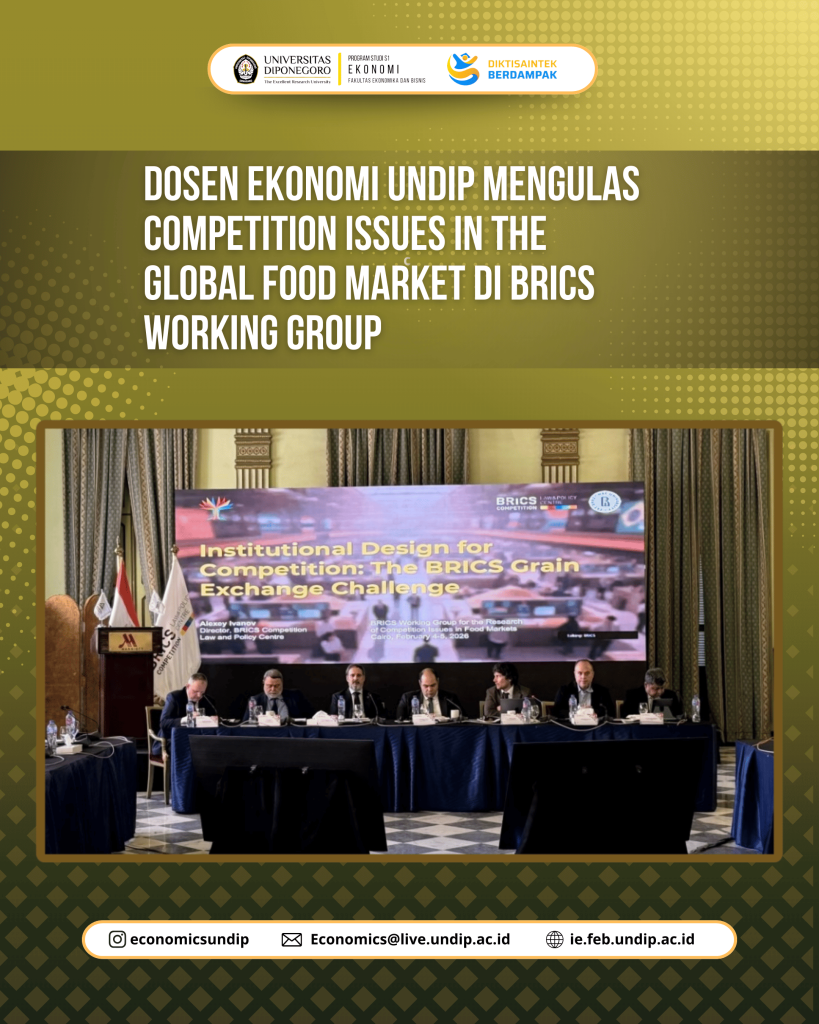
Cairo, February 5, 2026 – Lecturer in Economics at Diponegoro University (Undip), Esther Sri Astuti, Ph.D., participated in the BRICS Working Group for the Research of Competition Issues in Food Markets forum held on February 4-5 in Cairo, Egypt. In the international forum, he discussed the strategic theme “Sustainability and Competition Issues in Global Food Market”, which highlighted the relationship between the sustainability of the global food system and the dynamics of business competition in the food commodity market. This forum was organized by the International BRICS Competition Law and Policy Centre of the Higher School of Economics (BRICS Competition Centre) together with the Egyptian Competition Authority, and produced an important agreement to launch a joint analysis of the grain sector (grain sector) based on the academic report of the BRICS Competition Centre.
In the discussion, Esther Sri Astuti, Ph.D. emphasized that the challenges of the global food market are not only related to market structure and potential anti-competition practices, but also with sustainability issues (sustainability), food security, and the impact of climate change on price stability and commodity distribution. He emphasized the importance of competitive policy design that is able to maintain a balance between market efficiency, protection of small businesses, and the sustainability of the global food value chain. Meanwhile, Alexey Ivanov, Director of the BRICS Competition Centre, explained the conceptual framework of the upcoming study that will examine the global wheat trade in depth, including risks and potential losses due to the dominance of major global trade players.
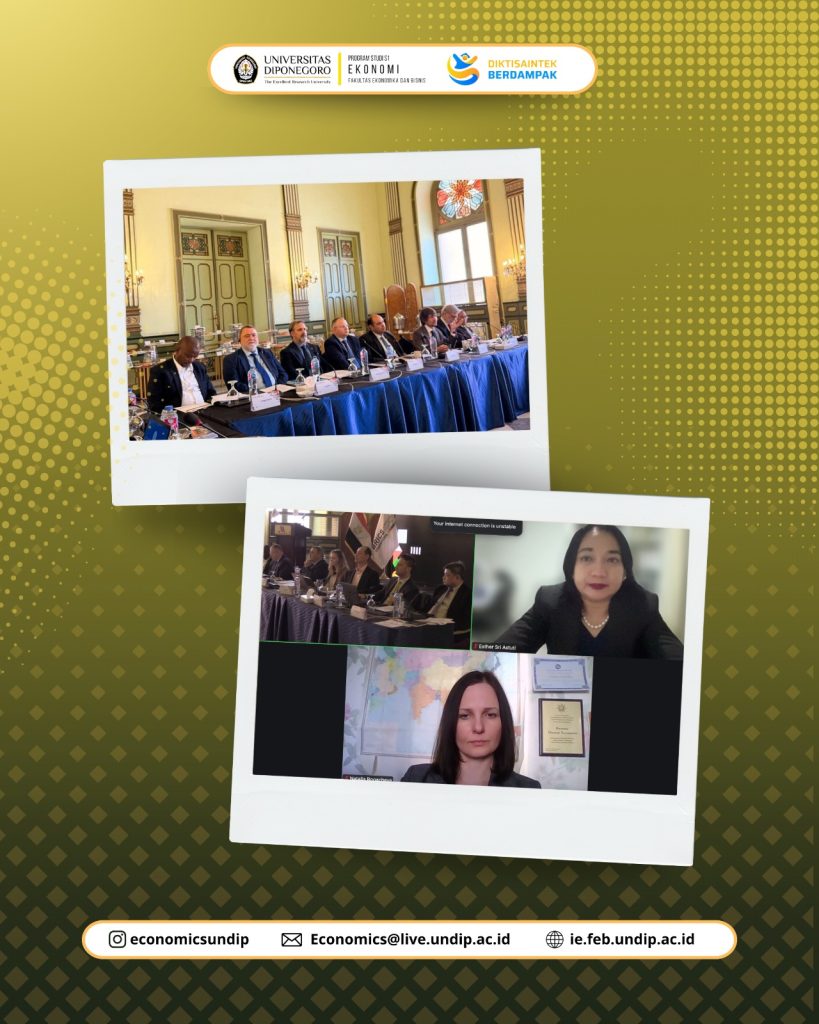
The business competition authorities of BRICS countries are encouraged to take a more active and coordinated role, from joint market studies, anti-cartel measures, to the initiative to establish the BRICS grain platform to create a fairer and more resilient trading system. From the Indonesian side, Fanshurullah Asa as the Chairman of the Business Competition Supervisory Commission (KPPU) emphasized Indonesia’s readiness to actively participate in this joint study. Market transparency is also a major highlight, especially in the midst of climate change that shifts the dynamics of scarcity and food availability. In addition, the initiative to develop a digital platform based on Artificial Intelligence (AI Agent) for data exchange between competing governments received wide support as a strategic step to strengthen cooperation and minimize information asymmetry in cross-country investigations.
Another important momentum is the signing of a memorandum of understanding between St. Petersburg International Mercantile Exchange and Egyptian Mercantile Exchange as the first step towards the establishment of BRICS Grain Exchange. This collaboration is expected to be a strategic instrument to increase transparency, reduce global cartel dominance, and strengthen the resilience and sustainability of the food system of BRICS countries. The participation of Esther Sri Astuti, Ph.D. in this forum shows the real contribution of Indonesian academics in a global discourse on fair, competitive, and sustainable food market governance. The spirit of collaboration, scientific integrity, and commitment to sustainability become an important foundation in building a more resilient and inclusive world food system.